The innovation trap: Why Japan hesitates while the world iterates
Why does a nation with world-class engineering, unmatched manufacturing discipline, and some of the world's highest Research and Development (R&D) spending repeatedly find itself following rather than defining modern technology waves?
Across Japanese corporate boardrooms and government ministries, two deeply entrenched cultural norms govern decision-making. The first is zenrei-shugi (前例主義), the doctrine of precedent. If a proposal lacks a proven track record, the institutional answer is almost always no. The second is mubyuu-shugi (無謬主義), the principle of infallibility. Because making a public mistake carries severe reputational and career consequences, executives and civil servants optimize for zero error rather than maximum upside.
When failure is treated as an unforgivable defect rather than an operational cost, organizations spend years refining plans for problems that have never been tested in reality. By the time a risk assessment is completed, global competitors have already launched, failed, adjusted, and captured the market.
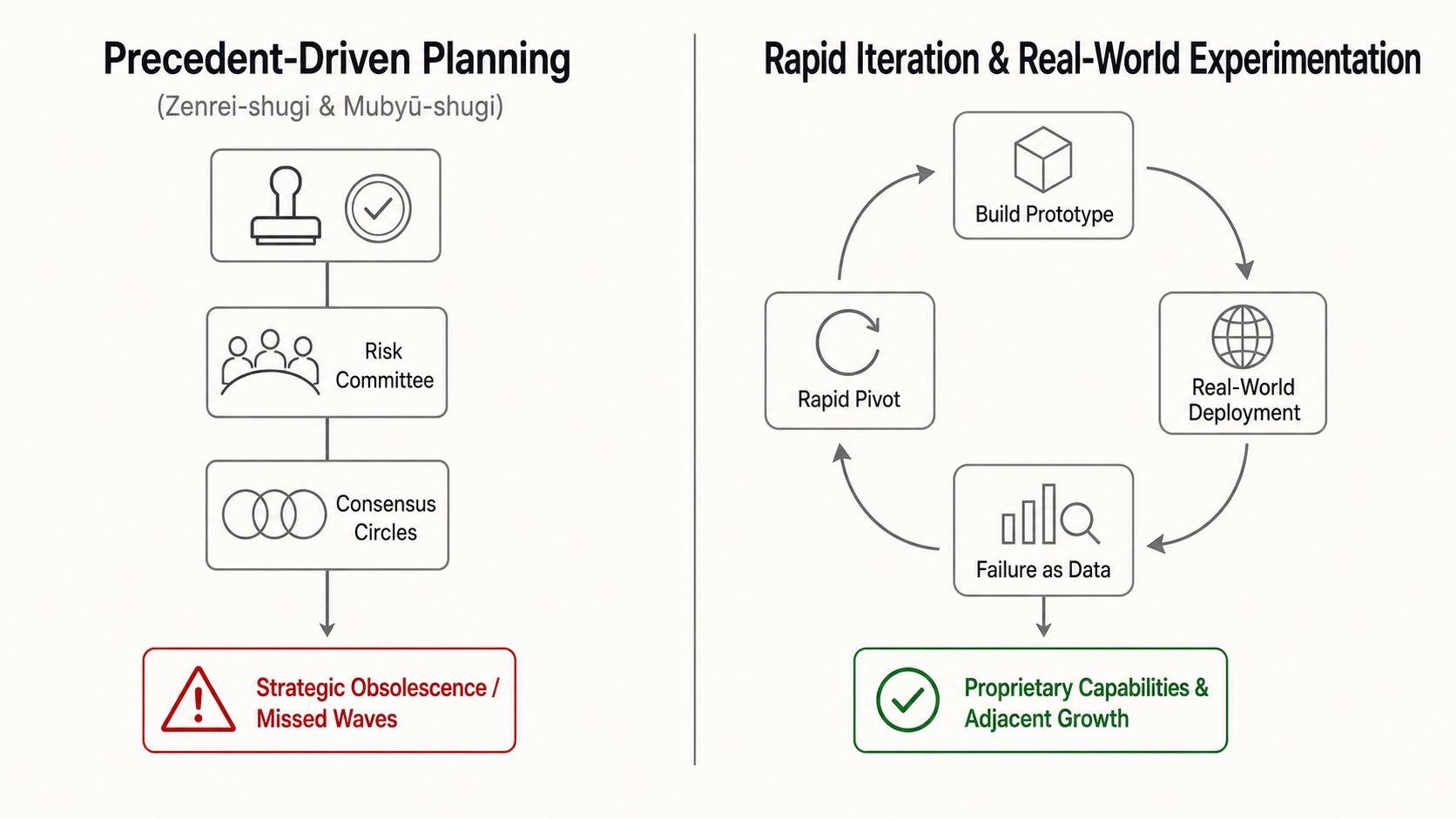
To see what the opposite operating philosophy looks like in practice, consider a headline that recently crossed the global tech sector: on August 20, 2026, Tesla quietly discontinued its ten-year Solar Roof initiative.
On the surface, the story looks like a cautionary tale of Silicon Valley excess and mismanagement. But when viewed through the lens of institutional innovation, Tesla's experiment reveals an essential truth that Japanese industry can no longer afford to ignore: the visible financial cost of a failed experiment is almost always smaller than the invisible, permanent cost of never trying at all.
A decade of ambition, reduced to a redirect
On August 20, 2026, tesla.com/solarroof quietly started forwarding visitors to tesla.com/solarpanels. No press release accompanied the change. According to Electrek, which confirmed the development through two independent sources familiar with the project, Tesla informed certified third-party installers that Solar Roof tiles are no longer available for order. The company internally concluded that the product was not financially sustainable. After nearly ten years, Tesla's Solar Roof has come to an end.
The operational numbers explain why the program was halted. Elon Musk promised 1,000 roof installations per week by 2020, a target he repeated during earnings calls between 2019 and 2020, according to reporting by Canary Media. According to market research firm Wood Mackenzie, the actual peak weekly installation rate reached between 21 and 32, roughly 97% below the stated weekly target. Wood Mackenzie estimated that approximately 3,000 Solar Roof systems had been installed across the United States as of its March 2023 analysis. Tesla stopped separately disclosing Solar Roof deployment figures in its quarterly filings in early 2024, according to Electrek.
Costs also escalated far beyond early estimates. Tesla's original marketing materials positioned the product at around \$22 per square foot. Customers who signed contracts later discovered prices had sharply increased. Court filings from a resulting class action lawsuit cited one homeowner whose \$72,000 contract was revised upward to approximately \$146,000 before installation began. According to CNBC, Tesla agreed to a \$6 million settlement in 2023. Law360 reported that a California federal judge granted final approval on March 7, 2024 for \$6.08 million covering 8,622 affected class members.
This is not the profile of a commercially successful product. It is a case study of an ambitious technical concept that failed to achieve manufacturing and operational scale.
Born as a pitch, tested in the real world
Solar Roof was born under controversial circumstances.
In October 2016, Musk unveiled the solar tiles on a Hollywood backlot, using the set of the television show *Desperate Housewives*. The timing was strategic. Several weeks later, Tesla shareholders voted to approve the \$2.6 billion acquisition of SolarCity, a residential solar installation company. According to Tesla's pre-merger 10-Q filing with the Securities and Exchange Commission (SEC), SolarCity carried approximately \$3.3 billion in consolidated indebtedness at the time. Musk was SolarCity's largest shareholder and chairman, and his cousins managed the firm.
The Solar Roof demonstration served as the central argument for the merger: the transaction was presented not as a rescue, but as the foundation of an integrated clean energy provider. Court records later showed that the tiles displayed during that event could not generate electricity; they were non-working prototypes.
Shareholders filed suit over the transaction. Musk prevailed in the Delaware Court of Chancery in 2022, and the Delaware Supreme Court affirmed that ruling in 2023, concluding that he had not forced Tesla to overpay. The broader point remains instructive: a bold concept convinced the market to support a multi-billion-dollar corporate combination years before the underlying engineering was solved.
Try, fail, adjust: The Musk iteration rhythm
If you examine Solar Roof in isolation, it is easy to dismiss the project as wasted capital. But that view overlooks the core mechanism that drives Musk's enterprises, a methodology that accepts public failure as the price of rapid learning.
Consider SpaceX. The Falcon 1 rocket failed on its first three launch attempts, bringing the company close to insolvency in 2008, as Musk recounted in interviews reported by Forbes. The National Aeronautics and Space Administration (NASA) had awarded SpaceX a Commercial Orbital Transportation Services (COTS) development agreement in 2006. The fourth Falcon 1 flight reached orbit, validated NASA's commitment, and opened the door to the Commercial Resupply Services (CRS) contract. That iterative path eventually produced the Falcon 9, orbital rocket reusability, and Starship.
The same dynamic played out at Tesla. During the Model 3 production ramp, automated assembly lines caused severe bottlenecks. In April 2018, Musk acknowledged on Twitter that "excessive automation was a mistake," admitting that Tesla had underestimated the flexibility of human workers. Management quickly redesigned the factory floor. The Model 3 subsequently became one of the top-selling electric vehicles globally, according to the International Energy Agency (IEA) Global EV Data Explorer.
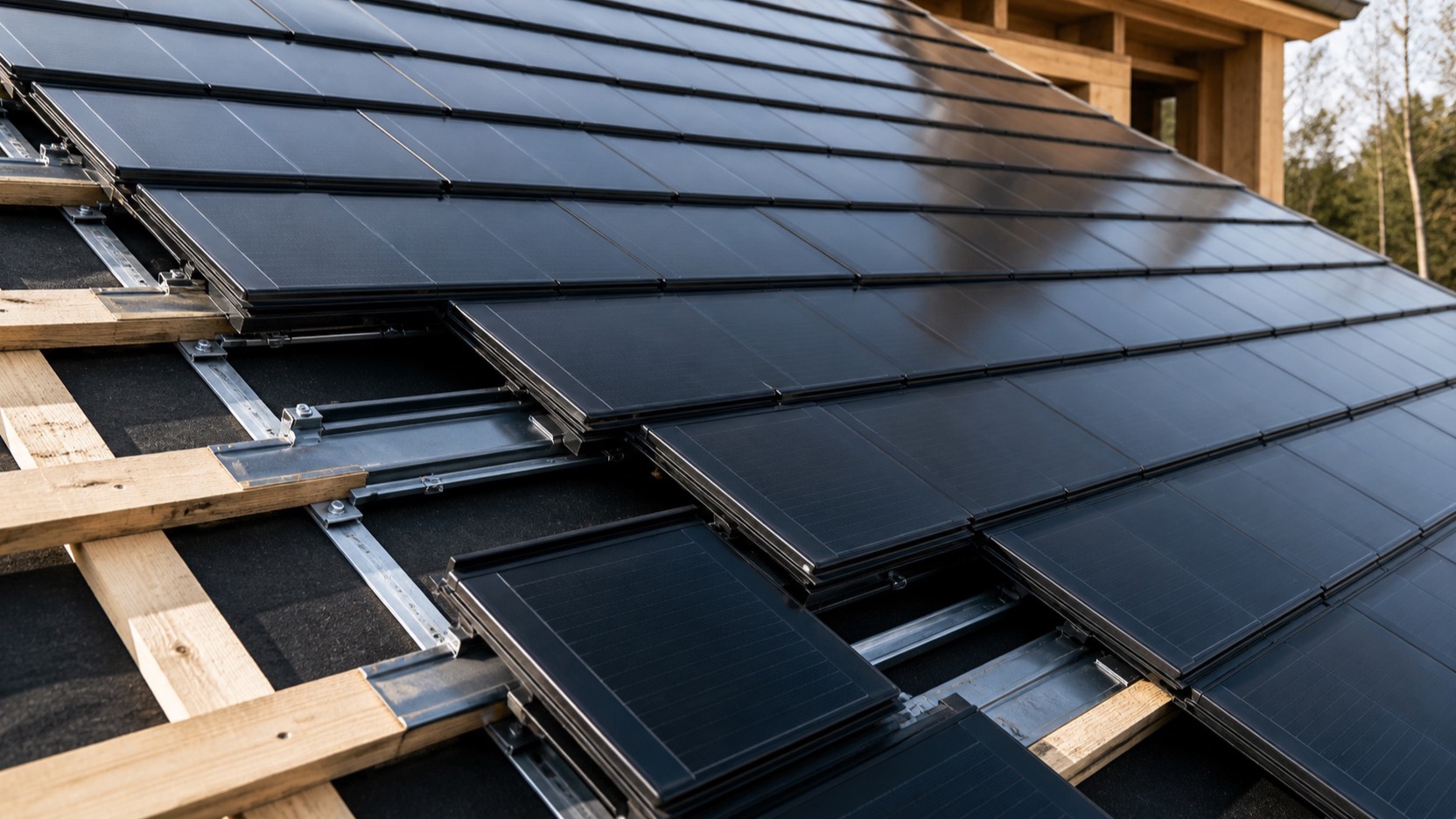
Solar Roof followed this exact trial-and-error cycle, but encountered physical and economic realities that could not be solved through software or factory reorganization. Building-Integrated Photovoltaics (BIPV) required custom installation crews, diverse roof geometries, and high labor costs that resisted automation. Tesla iterated through multiple product versions, attempted to build third-party contractor channels, and ultimately cut the tile product when the economics remained unviable.
What if Tesla had never tried?
Consider the alternative scenario: what if Tesla had evaluated Solar Roof exclusively through conservative risk committees in 2015?
A traditional review board would have spotted the warning signs immediately. Custom roofing requires bespoke craftsmanship. Interconnecting hundreds of electrical tiles introduces multiple points of failure. Labor costs vary widely by region. The committee would have safely vetoed the project.
Had Tesla made that cautious choice, what would have happened?
First, the industry would lack the definitive real-world deployment data from thousands of residential installations that established where the limits of BIPV technology lie.
Second, and more importantly, Tesla would have missed the foundation of its entire energy storage business. While the Solar Roof tiles did not scale, the SolarCity transaction brought installation infrastructure, commercial partnerships, and manufacturing resources to Tesla. Tesla had launched the Powerwall home battery in 2015, and the acquisition accelerated its integration with solar power. Today, Tesla Energy, which includes the Powerwall and the utility-scale Megapack, represents one of the company's fastest-growing and highest-margin divisions, as highlighted in reporting by Electrek.
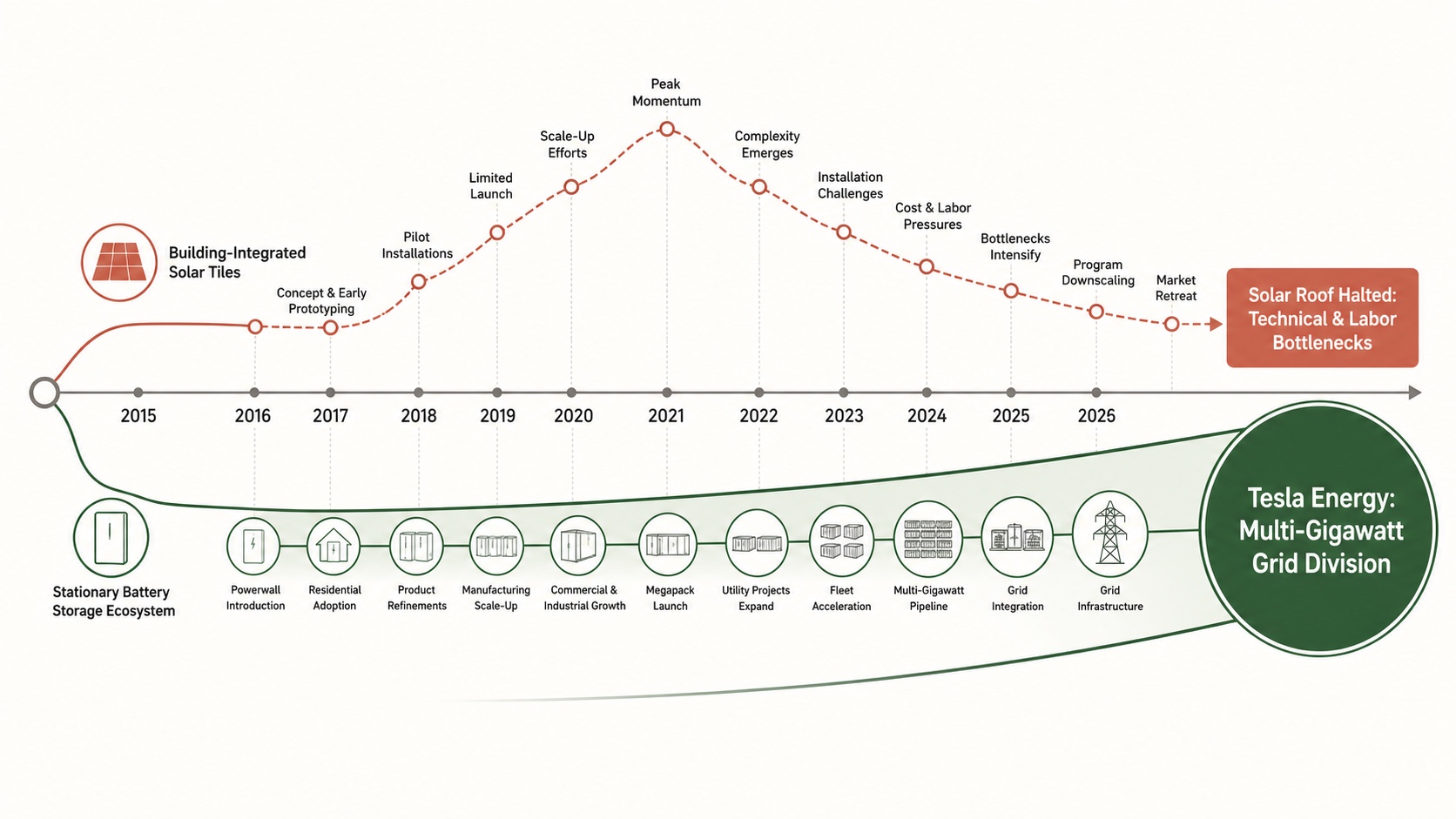
When an organization tries and fails, it converts capital into actionable data and unexpected capabilities. When an organization avoids trying, it produces zero data, builds no new operational muscle, and remains exposed to sudden disruption.
The mirror for modern Japan: What happens when failure is forbidden
This brings us back to the central dilemma facing Japan's economy.
If the Solar Roof concept had been proposed inside a traditional Japanese conglomerate, what would have taken place?
Under the rules of zenrei-shugi (前例主義), the proposal would face immediate resistance: no domestic competitor had successfully sold mass-market photovoltaic roof tiles, and no existing sales channel handled combined roofing and electrical contracting. Under mubyuu-shugi (無謬主義), the operational risks, such as unpredictable installation labor and prototype uncertainty, would make executive sponsorship career suicide. The project would be studied, revised through countless consensus-building meetings (*nemawashi*), and quietly shelved.
The organization would avoid a \$6 million class action settlement. It would avoid headlines about missed installation targets. But it would also guarantee that its engineers never learned the operational realities of distributed solar installation, and it would fail to build the broader energy storage ecosystem that emerges from such ambitions.
This dynamic is not theoretical. Over the past twenty years, analyses from institutions such as the Center for Strategic and International Studies (CSIS) and Stanford University's Asia-Pacific Research Center have highlighted a recurring pattern in Japanese digital transformation and industrial policy: exhaustive planning followed by hesitant execution, resulting in technically sound products that enter the global market long after the platform standards have been decided.
The true cost of risk aversion
Tesla's Solar Roof was an operational failure. The product failed to achieve viable economics, installation targets were missed by roughly 97%, and customer disputes resulted in a multi-million-dollar legal settlement.
Yet Tesla emerged from the decade-long initiative with a dominant stationary energy storage business, practical knowledge of solar manufacturing limits, and an organizational culture that remains unafraid to tackle massive technical challenges.
The fundamental lesson for business leaders is clear: the most dangerous decision in modern industry is not the failed initiative that burns R&D capital. It is the cautious non-decision that protects current-quarter stability at the cost of long-term relevance.
In an era of rapid artificial intelligence and hardware transformation, organizations that spend years perfecting plans for unverified problems are not avoiding risk. They are guaranteeing obsolescence. Tesla killed its Solar Roof, but the willingness to put an unproven tile on a roof in the first place is precisely why it leads in other fields. The real waste is a system where no one is allowed to fail.