*AI-generated cover scene with the game homepage shown on the phone.*
A little game for the pauses in a journey
Three stages, about ten minutes, and a pair of little oni helping you send hot spring water through a town. That is the idea behind Beppu Yukemuri Sankei, our small browser game inspired by Beppu.
We made it for the gaps in a day out: waiting for a bus, waiting for friends, or taking a break between stops. We wanted to give travelers something enjoyable to do in those moments, with a few local discoveries and a digital keepsake to take away.
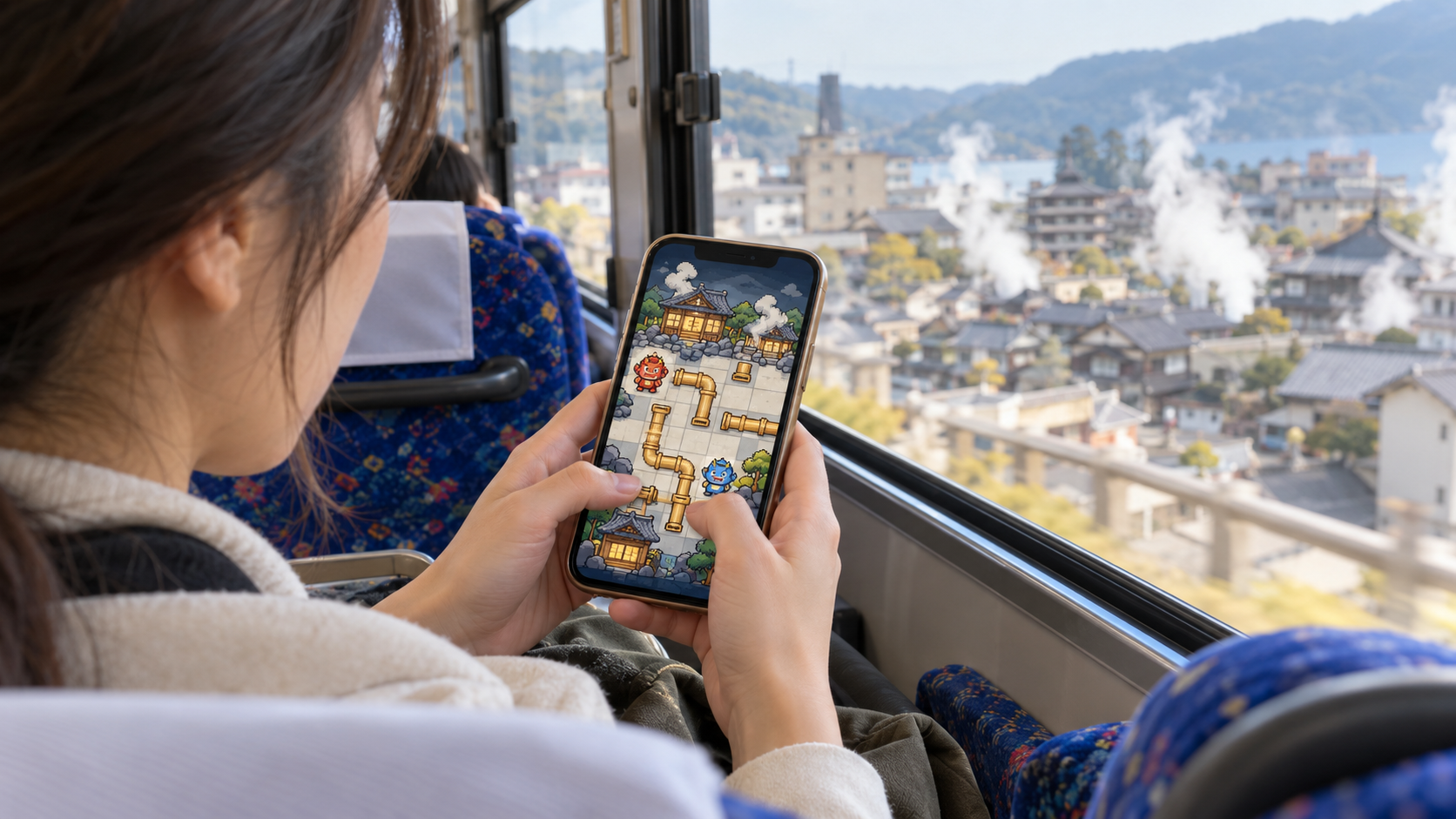
*AI-generated travel scenario: a short game for a bus journey. The phone screen is illustrative.*
At ARUO, we enjoy making things people can play with. This project gave us a chance to bring that enthusiasm together with our interest in local places and their stories. Could a short game make someone curious about a hot spring district they had not visited yet? Could a character or a little illustrated card help a place stay in their memory?
Beppu Yukemuri Sankei is our attempt to explore those questions. It is an ARUO demo inspired by real places, with simplified game rules. We hope it gives people a smile and a reason to look a little closer at Beppu.
Three views of Beppu
The game takes players through Kannawa, Myoban, and a final scene around Takegawara Onsen. We chose these settings to introduce different sides of the city's hot spring culture within a short experience. Two are hot spring districts; Takegawara is a particular bathhouse in central Beppu.
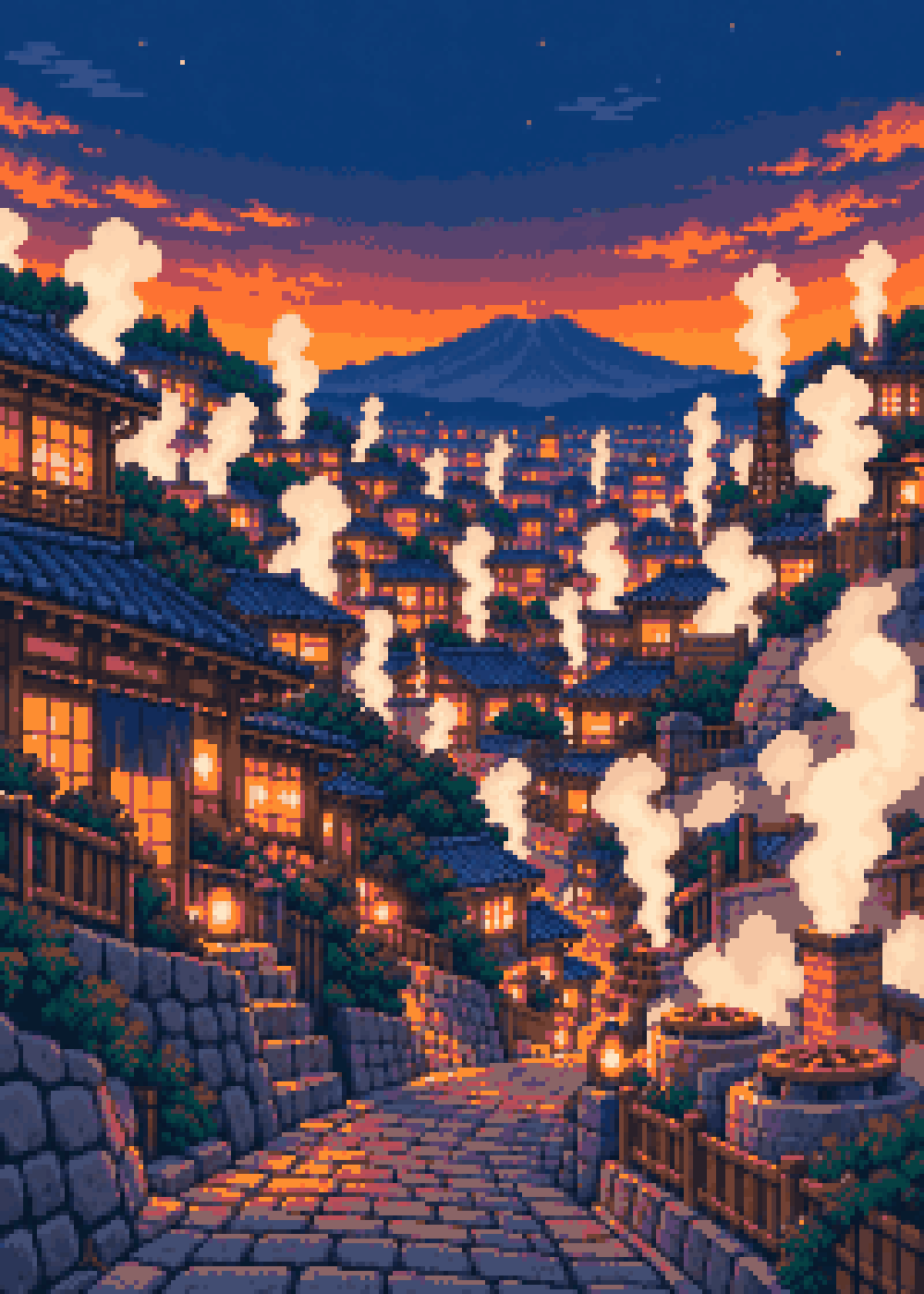
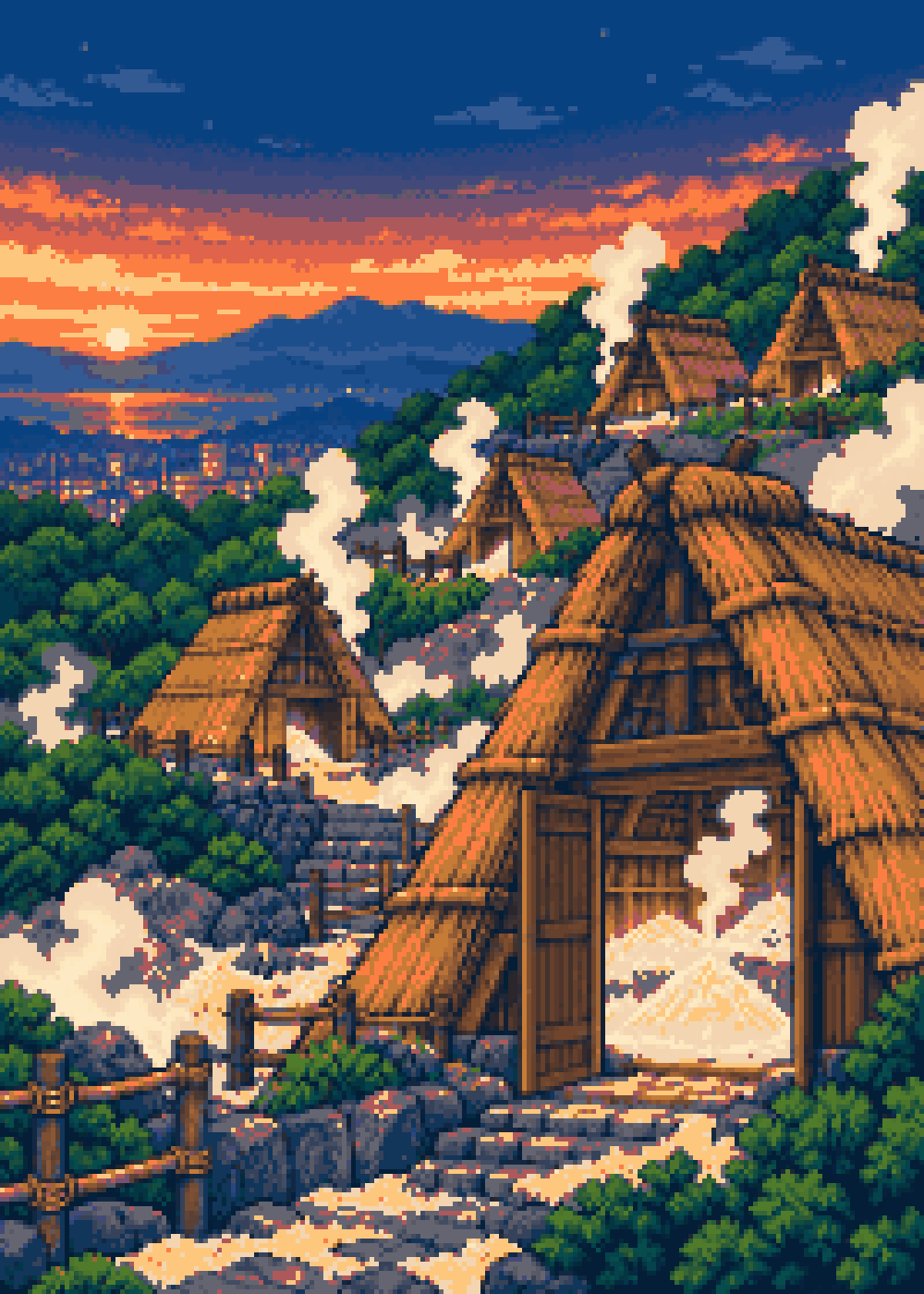
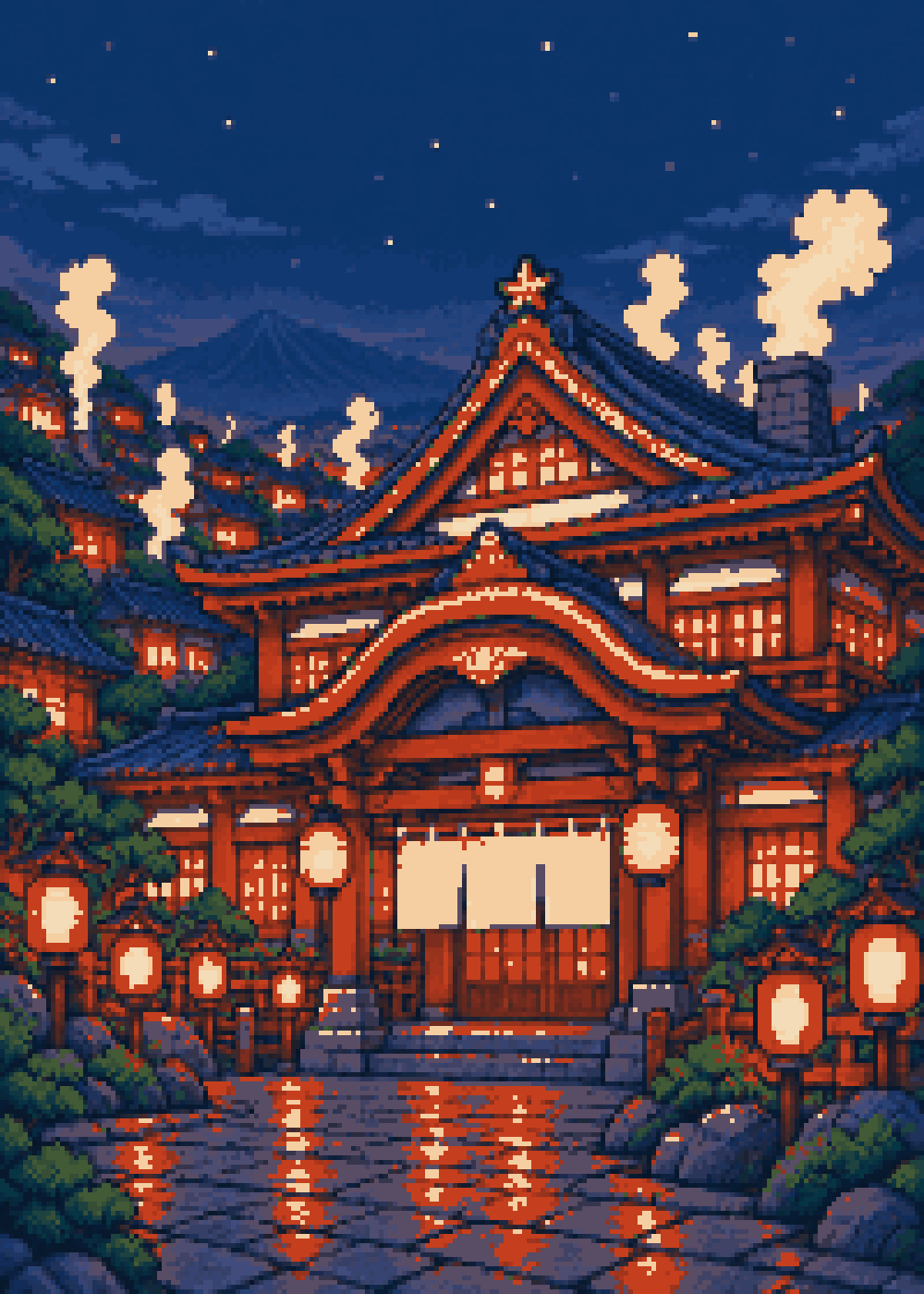
*Game card artwork, left to right: Kannawa, Myoban, and Takegawara.*
Kannawa: a town shaped by steam
Kannawa introduces the pipe-laying game. You start with the red oni and learn how to connect a route to the town's inns.
Steam is central to the real place, too. It rises through the district and is part of everyday life. Local jigoku-mushi cooking uses hot spring steam to prepare food, as described by Visit Oita's guide to Kannawa.
That relationship between the springs and the town gives the game its starting point. Connecting pipes turns hot spring activity into something the player can take part in. Our pixel-art card returns to the wider scene: rooftops, slopes, and rising steam.
Myoban: the huts behind the souvenir
The second stage introduces the blue oni alongside the red one, with Myoban Onsen among the facilities to connect.
For the artwork and collectible card, we focused on Myoban's yunohana huts. These thatched structures use hot spring steam to produce yunohana bath salts, according to Visit Oita's Myoban introduction.
We liked having something specific for players to discover here. A souvenir has a process and a place behind it. The hut on the card gives that story a visible form, and the short note on the back gives players a starting point for learning more.
Takegawara: a bathhouse at night
The third scene moves to Takegawara Onsen. Its wooden bathhouse and curved roof give us a different subject for the final card, pictured at night.
Takegawara is known for both hot spring baths and sand baths. The Japan National Tourism Organization's introduction describes its history and bathing traditions.
We wanted the three cards to leave players with distinct images: Kannawa's steam, Myoban's huts, and Takegawara's bathhouse. Each is a small invitation to find out what the real place is like.
Why a red oni and a blue oni?
The two little characters are oni, creatures from Japanese folklore often translated as demons or ogres. In our game, they are friendly helpers with horns, expressive faces, and plenty of energy.
Oni also fit Beppu's visual setting. The city's hot spring sightseeing sites are known as jigoku, or "hells," and oni appear in that imagery. One example is the red demon statue at Kamado Jigoku, described in the Japan National Tourism Organization's account of Beppu's hells.
Our characters are our own playful interpretation of that setting. The red oni is lively; the blue oni is more laid-back. Both help send hot spring water through the pipes. The contrasting colors make them easy to tell apart on a small screen, while their faces give the board some personality.
We wanted those local references to feel welcoming. You can enjoy the characters before knowing anything about Beppu's jigoku, then discover the connection as you learn more about the city.


*The game's original red oni and blue oni sprites.*
Keeping the experience small
We designed this version around a short break during a trip. It has three stages and a clear finish, with a total playtime of about ten minutes, including the moments between stages.
That choice shaped the difficulty. The opening stage teaches the basics, and later stages add a second oni and special moves. We aimed for an approachable experience that visitors with different levels of gaming experience could enjoy.
Every stage awards a card, even when a run earns no stars. Stars change the card's finish, so players who enjoy an extra challenge can replay for a better version. Collecting all three cards is part of the journey; chasing every star is optional.
For us, a traveler leaving with a little more curiosity about Beppu is the outcome we hope for. The game should fit into their visit and leave them time to enjoy the place itself.
How to play
Open the demo in your browser and choose Traditional Chinese, Japanese, or English. Then follow the first-stage tutorial:
- Place and rotate pipes to build a route toward an inn or hot spring facility.
- Tap an oni to send hot spring water along the route.
- Connect facilities and earn coins during the stage. Later stages add obstacles and special moves to try.
- At the result screen, collect your illustrated card and continue to the next setting.
You can open the card album, flip cards to read the local trivia, and drag them to see their reflective effects. Higher star results unlock silver or rainbow-gold finishes. You can also save or share a card image.
The demo includes example local reward vouchers to show how a game could connect with a reward during a visit. These are demonstration items only. They cannot be redeemed for real discounts or goods.
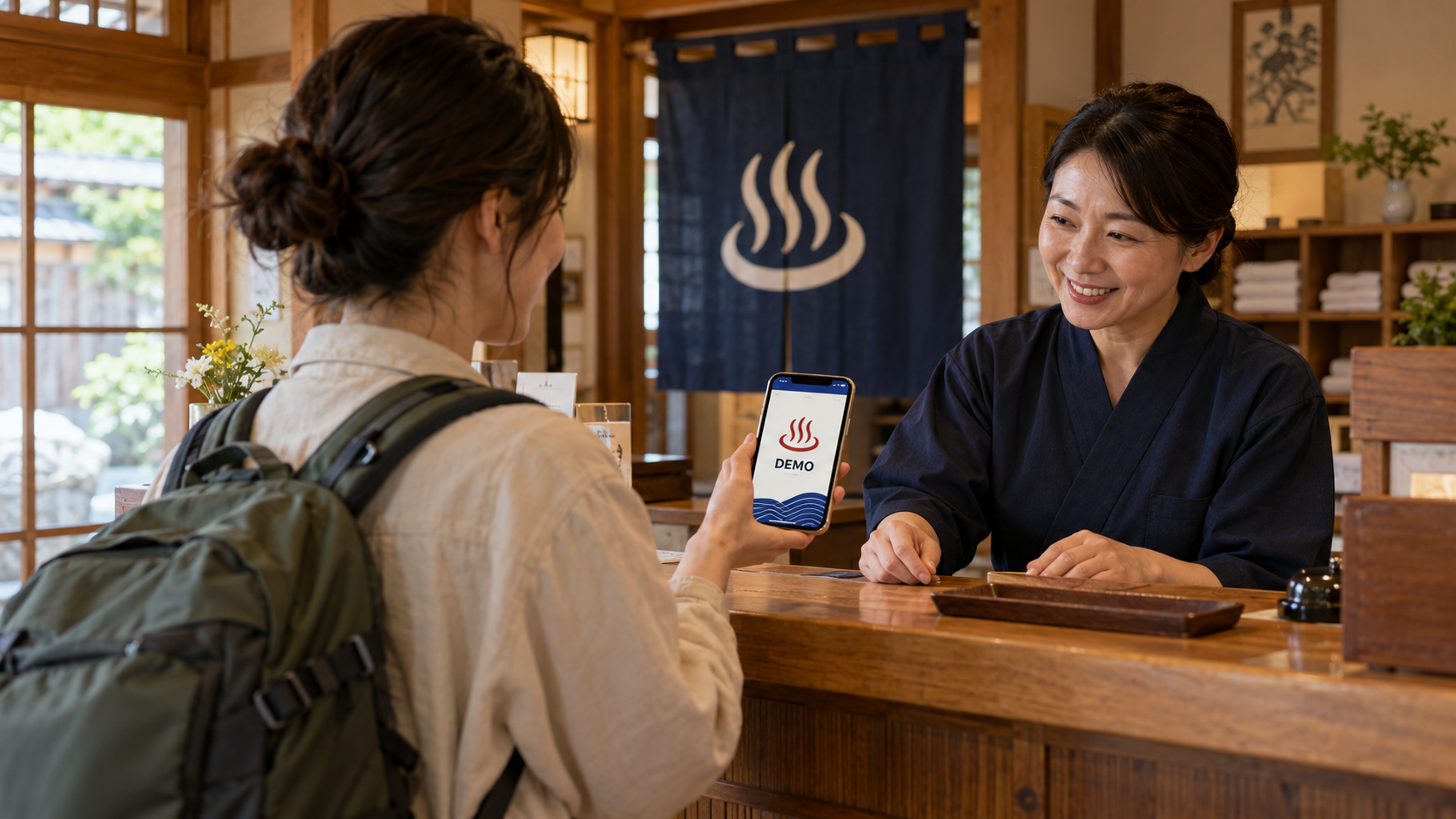
*AI-generated concept of a future onsen reward experience. The current demo coupons cannot be redeemed; no participating venue is implied.*
A small experiment from our team
This project brings together work we enjoy: character design, pixel art, local research, and building interactions that people can try for themselves. The pipe game, illustrated cards, and short cultural notes gave us different ways to introduce the same place.
We hope the care in those choices comes through when you play. Perhaps you will remember a roofline, wonder how yunohana is made, or recognize one of the scenes on a future visit.
Play the three-stage demo, meet the two oni, and collect your own little views of Beppu. We would love to hear which scene made you curious.