Suppose a customer tells your sales director, “We would have considered your offer, but we had already placed the order by the time your quote arrived.” At the next meeting, the director wants to know whether to hire someone, change how quotes are approved or give customers a faster way to get a price.
This is a good first assignment for a leader learning to use artificial intelligence (AI). You know what a lost order costs. Your staff know what happens between a customer calling and a quote going out. How much AI can contribute depends on where you bring it into that work.
Starter level: prepare the proposal
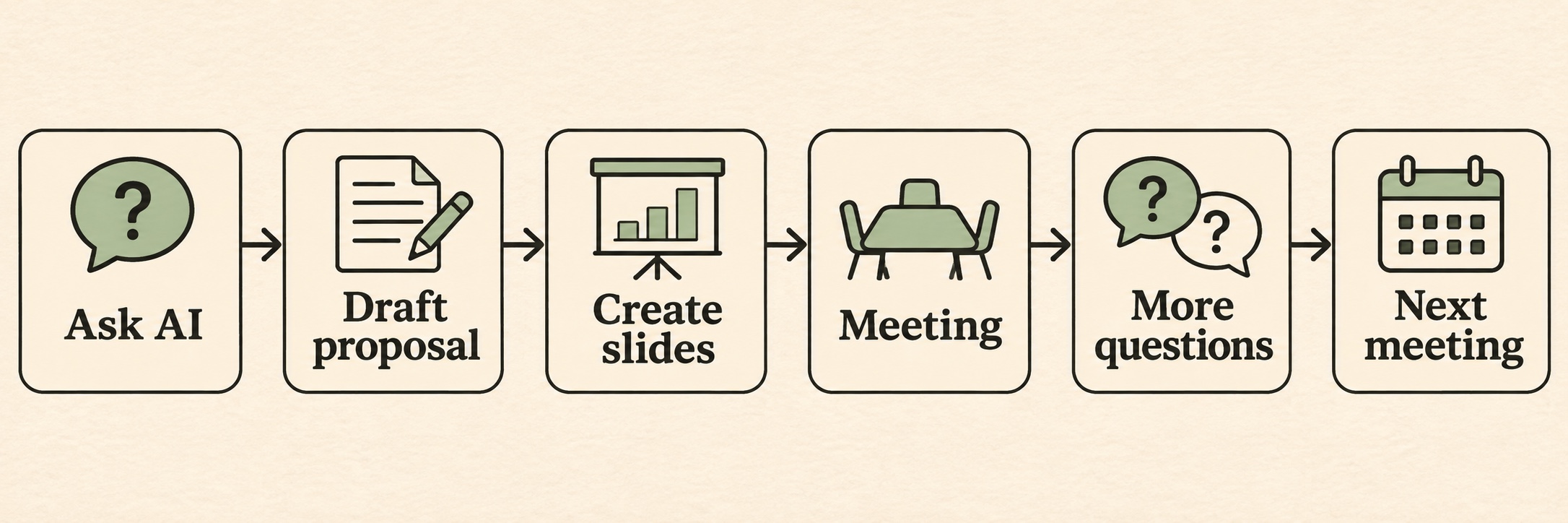
- A salesperson describes the delay to an AI assistant and asks for suggestions. The assistant suggests a standard quote form, quicker approvals and more staff at busy times.
- The salesperson picks the form idea, asks AI to write a proposal and edits it. AI then summarises the proposal and turns it into slides for the management meeting.
- At the meeting, finance asks whether discounts are holding up approvals. Sales raises another possibility: customers sometimes leave the quantity blank. The salesperson takes notes and agrees to investigate before the next meeting.
The team has saved time preparing a document. Yet the director still has to wait to find out where quotes get stuck. Felix Rieseberg, an engineering manager at Anthropic, urges people to be more ambitious about the outcome they ask a model to pursue. For this team, that means finding a way to get an accurate price to a customer while the order is still open. Rieseberg’s essay
Advanced level: work the problem together
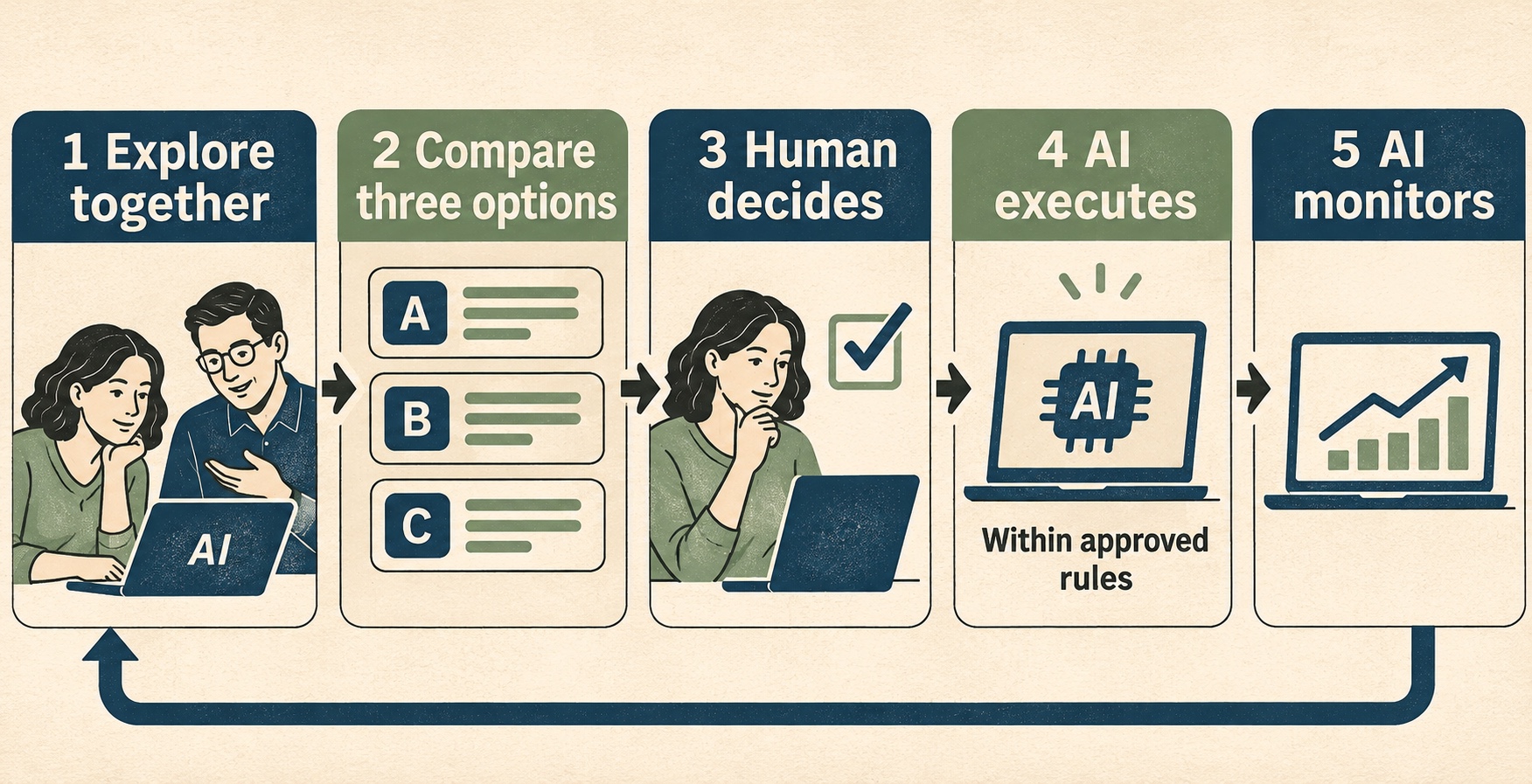
- Investigate with the staff. The director brings sales and finance together with an AI agent, an assistant that can use approved tools. They give it access to recent quote requests, approval times and customer feedback they are allowed to use. A competitor’s published turnaround promise gives them a benchmark. The agent traces where requests waited. Staff challenge its first explanation and ask it to check again. For example, a quote marked “awaiting approval” may actually have been waiting for a customer to confirm the quantity.
- Ask for three workable options. Each option must identify which cases it would help, cite the records behind it and explain what it would cost or put at risk. The team sets aside any option the evidence cannot support. Suppose the records support these three. A form that asks for quantity up front could reduce follow-up, though it adds a step for buyers. Routing standard quotes directly to sales could shorten approval time, provided exceptions still reach finance. Adding cover at peak hours could clear a queue of complete requests, at a staffing cost.
- Make the decision. The director checks sample cases with both managers. Suppose approval delays account for the most missed opportunities. She authorises a two-week routing trial for standard quotes at one branch. Finance keeps authority over discounts. The director names the person who can stop the trial.
- Have the agent carry it out. Within those limits, the agent checks incoming requests, routes qualifying quotes to sales and sends exceptions to finance. Staff can correct a routing error. The agent records each handoff so the team can see what happened to an individual quote.
- Keep AI involved after launch. Each morning the agent compares turnaround times with similar quotes before the trial and checks for pricing corrections. If simple quotes move faster but discounted orders wait longer, it alerts both managers, shows the affected cases and suggests a change to finance coverage. The managers check the evidence and decide whether to adjust the trial. The agent then tracks the effect of their decision.
How to teach this as a leader
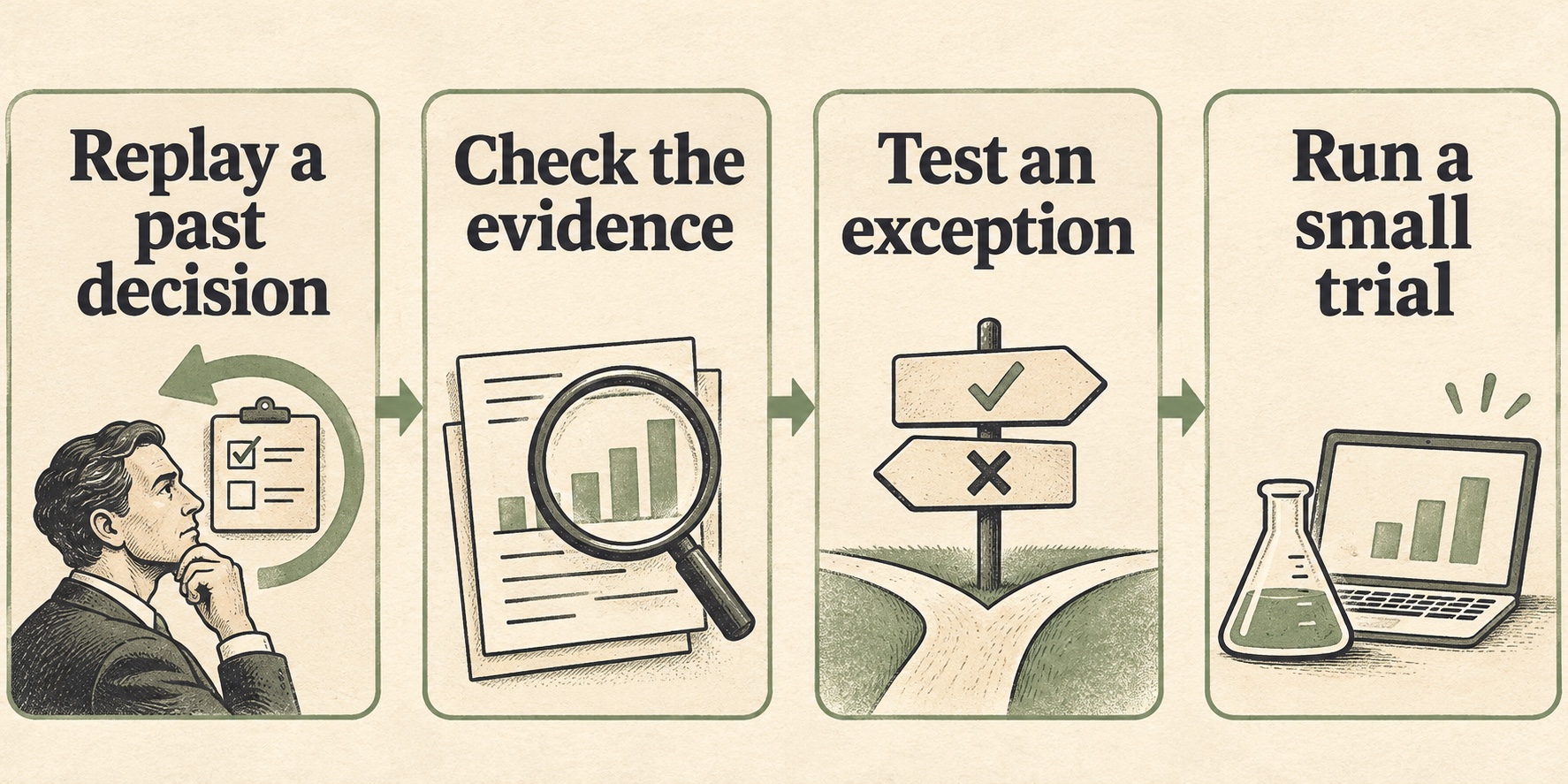
Before handing the exercise to a team, try it yourself on a completed case. Give AI only the information available at the time. Ask for three options, open one of the cited records and challenge an assumption. Then reveal the actual outcome and see what the analysis missed. That hour gives you something concrete to teach, including where you would have trusted the answer too quickly.
At your next leadership session, let another manager operate the AI. Ask a colleague who knows the work to introduce an exception, such as a standard order with a special discount. Have the manager ask the agent to trace the case, identify who can approve it and demonstrate where it would stop. Give the team time and authority to fix what fails before it runs a live trial. Showing a junior colleague how to challenge the director’s preferred option is part of the training, too.
At ARUO, we have spent the past few months building the conditions for this kind of work. Our agents work in Slack, use tools connected for particular assignments and draw on models suited to the task. We set access and security rules for people and agents. Shared memory helps teams carry relevant decisions forward. We train colleagues, review the results critically and revise how the work runs. We are still learning which tasks an agent can handle reliably and where a person needs to step in.
A Microsoft Office licence or a point-of-sale subscription buys a familiar capability. An AI subscription leaves you with decisions about what your team should attempt, who has authority to act and whether people feel free to question a convincing answer. Competitors can buy the same tools. The time they spend learning to make better decisions together is harder to catch up on.
If a recurring decision keeps your customers waiting, bring it to ARUO with the people who make it. Together we can design a trial, connect the agent to the right information and train your managers to judge whether the new way of working earns its place.