Inbound travel spending in Japan reached 2.5 trillion yen in the second quarter of 2026, according to quarterly survey data published by the Japan Tourism Agency. While overall spending increased, entertainment and cultural activities accounted for only 4.3% (108.8 billion yen) of the total, trailing far behind accommodation at 37.0% and shopping at 26.8%. At the same time, international visitors from long-haul markets spent significantly more per trip. Travelers from Mexico spent an average of 515,000 yen across 13.6 nights, visitors from the Middle East spent 483,000 yen across 12.5 nights, and visitors from the United Kingdom spent 456,000 yen across 14.1 nights.
These visitors are not traveling across the world to spend their entire vacation in crowded metropolitan shopping districts. They are seeking deeper, place-based experiences across regional Japan.
The gap between overall visitor spending and experiential spending highlights a major economic opportunity for regional destinations. Unlocking that opportunity requires solving two persistent friction points: complex regional transit and deep cultural language barriers. That is where digital transformation (DX) and artificial intelligence (AI) are beginning to reshape the travel experience.
Moving from visitor volume to high-value experience
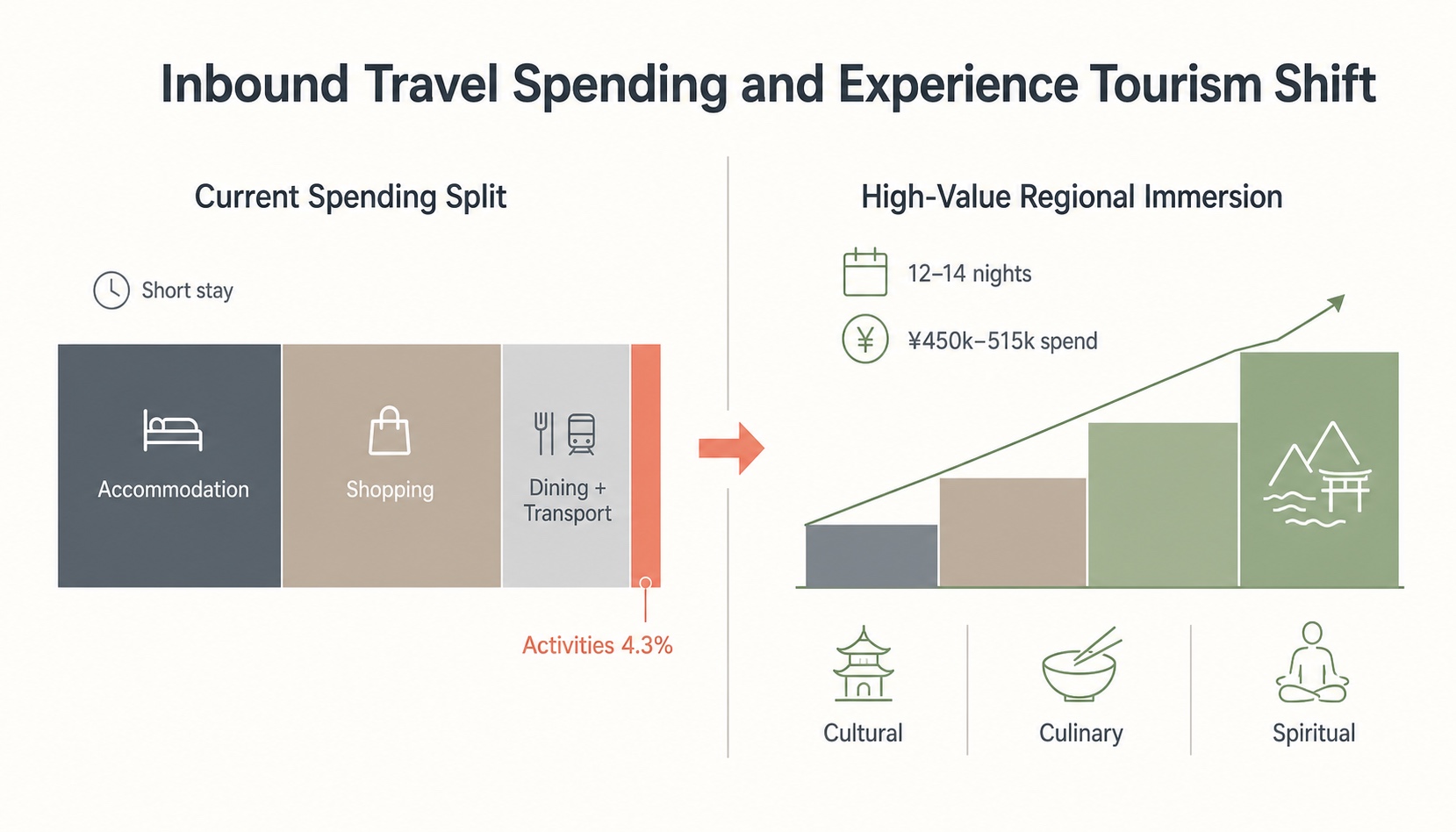
For years, regional tourism strategies focused almost entirely on topline visitor counts. In its 2026 inbound tourism survey, industry media organization Yamatogokoro reported a decisive shift across municipalities and operators from headcounts to value per visitor and regional dispersion.
Urban centers like Tokyo and Kyoto face severe overcrowding on public transit, while rural areas deal with depopulation, aging infrastructure, and local labor shortages. Simply busing tour groups into rural towns for brief photo opportunities does not create sustainable local revenue. In fact, it often creates local friction without supporting local businesses.
In contrast, experiential tourism (often called "koto-shohi" or consumption of experiences) keeps visitors in a region for multiple days. Travelers hike historical trails, stay at family-run inns, participate in traditional crafts, and eat locally sourced meals. This approach generates direct economic returns for local artisans, farmers, and hospitality operators while reducing congestion in major transit corridors.
Spiritual and adventure routes are leading this transition. Regions such as Dewa Sanzan in Yamagata Prefecture, the Kumano Kodo pilgrimage routes in Wakayama Prefecture, and the 88-temple Shikoku Pilgrimage (Shikoku Henro) are seeing strong interest from global travelers looking for wellness, mindfulness, and outdoor exploration.
Connecting regional routes with multimodal infrastructure
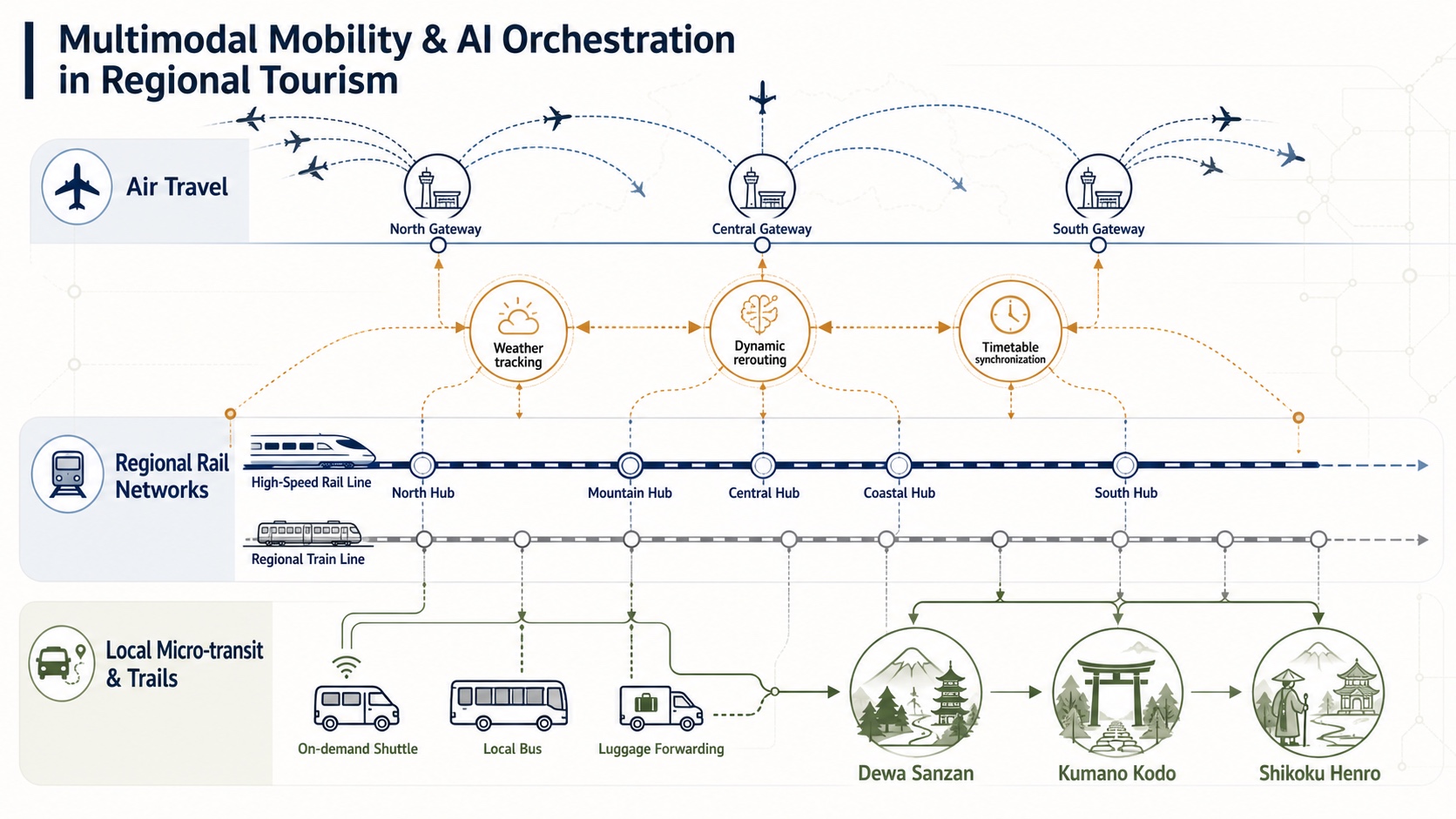
The primary obstacle for international travelers venturing into regional Japan has always been connectivity. High-speed bullet trains connect major cities efficiently, but reaching spiritual trails and rural valleys requires coordinating domestic flights, regional trains, local buses, and on-demand taxis.
To address this challenge, Japan Airlines (JAL) and four regional rail companies (JR East, JR West, JR Central, and JR Shikoku) announced a joint cross-regional model connecting flight routes with rail lines. The initiative focuses on linking travelers to regional spiritual hubs including Dewa Sanzan, Kumano Kodo, and Shikoku Henro through integrated transit marketing.
Physical connectivity, however, is only the first step. Without digital integration, navigating rural transit networks remains intimidating for non-Japanese speakers. A missed hourly bus in a rural valley can disrupt an entire multiday hiking itinerary.
This is where multimodal mobility platforms and AI orchestration prove valuable. By combining air schedules, train timetables, and local mobility as a service (MaaS) data into a single responsive system, operators can provide international travelers with reliable, real-time journey planning that dynamically adjusts to weather changes, trail closures, and transit delays.
Five practical ways AI and DX enhance the travel experience
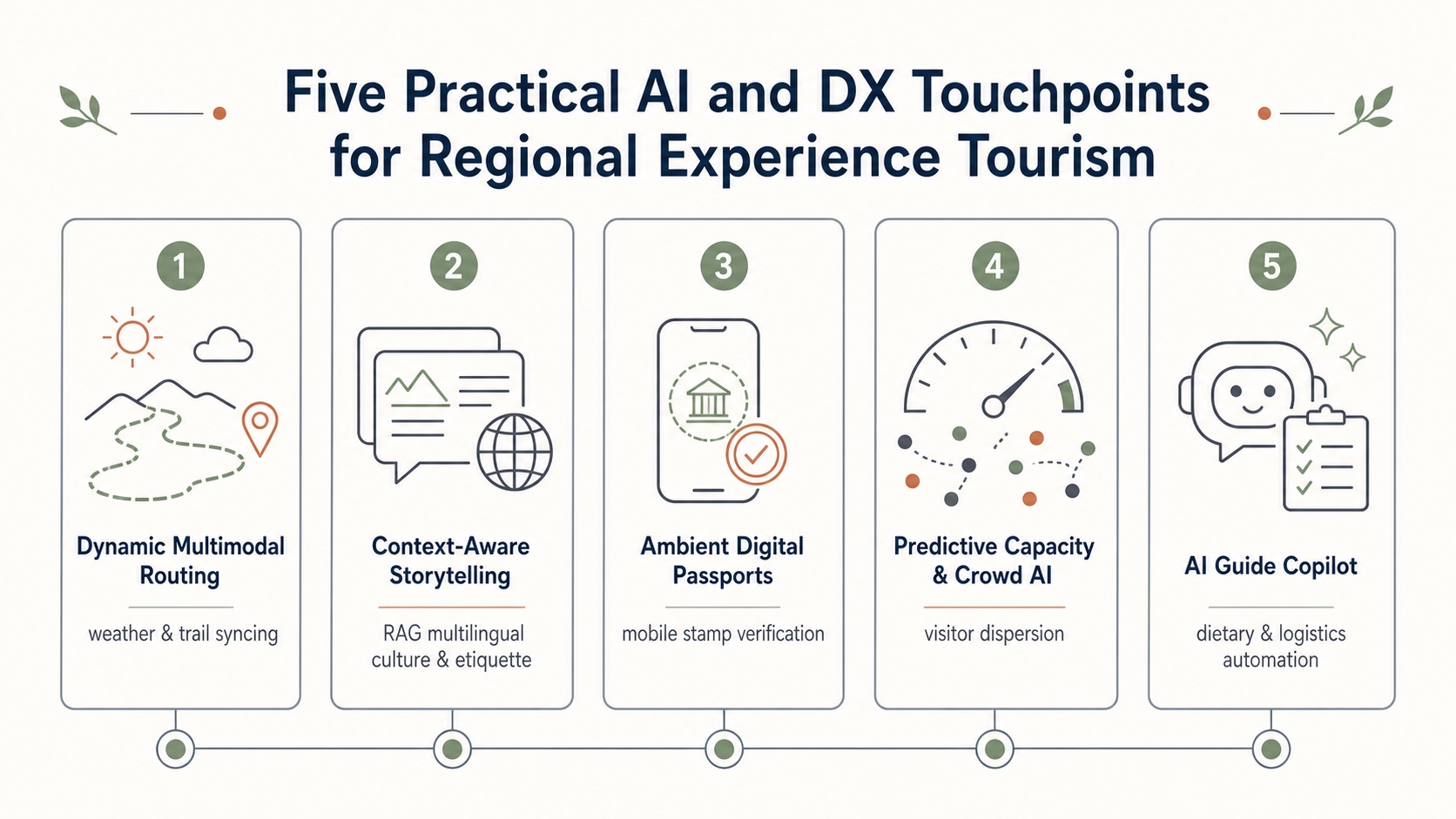
Digital tools in tourism are moving beyond basic online booking forms. Practical applications of generative AI, real-time data feeds, and ambient mobile technology are directly improving the quality of regional journeys.
1. Dynamic multimodal journey orchestration
Travelers on rural routes often encounter unpredictable conditions, such as sudden mountain rainstorms, seasonal bus schedule adjustments, or trail maintenance. AI-powered route orchestrators can monitor local transit feeds, weather forecasts, and hiking trail advisories simultaneously. If weather conditions temporarily close a section of a pilgrimage trail, the system can automatically suggest an alternative scenic rail connection, update luggage forwarding services, and adjust lodging check-in notices without requiring the traveler to make complex phone calls in Japanese.
2. Context-aware cultural storytelling
Understanding Japanese sacred architecture, Shinto purification rituals, or local fermentation traditions requires cultural context that standard translation apps cannot deliver. Dedicated AI concierges built with retrieval-augmented generation (RAG) can access curated historical archives to answer visitor questions in natural language. Instead of a robotic literal translation of an informational plaque, the system explains the underlying philosophical meaning, historical context, and proper visitor etiquette in clear, culturally relatable terms.
3. Ambient digital touchpoints and modern credentials
Historic pilgrimage routes rely on a sense of tranquility and natural preservation. Plastering physical signboards in multiple foreign languages along ancient stone paths detracts from the spiritual environment. Digital alternatives, such as smartphone-based digital stamp collections and multilingual mobile guides (including digital stamp platforms used across regional rail stations), allow travelers to record their journey on their phones. These tools offer interactive guidance and cultural notes without creating visual clutter along sacred paths.
4. Predictive crowd management and capacity control
Even remote cultural sites can experience localized bottlenecks during morning prayer times or autumn foliage peaks. By analyzing historical foot-traffic data and real-time mobile sensor feeds, regional destination management organizations (DMOs) can predict congestion hours in advance. AI systems can gently nudge independent travelers toward alternative morning walking routes, nearby craft workshops, or lesser-known sub-temples, preserving the peaceful quality of the site for everyone.
5. AI copilots for local guides and regional operators
High-quality local guides are essential for memorable cultural tours, but experienced multilingual guides are scarce in rural prefectures. AI copilots help local guides streamline back-office administrative tasks, such as translating detailed itineraries, managing international payment confirmations, and cross-referencing visitor dietary requirements (such as vegetarian, vegan, or halal restrictions) with local innkeepers. By automating operational overhead, guides can dedicate their full attention to hospitality and personal storytelling.
Building sustainable, data-driven regional destinations
Technology alone does not create a compelling travel experience; authentic local culture does. But technology provides the operational backbone that makes authentic culture accessible, safe, and economically rewarding for host communities.
For regional governments and destination management organizations (DMOs), investing in digital infrastructure is no longer an optional marketing expense. It is a fundamental management capability. By integrating real-time transit data, multilingual AI assistance, and capacity monitoring, regions can attract respectful, high-value travelers who stay longer, spend meaningfully, and contribute to the preservation of local heritage.
The future of regional tourism is not about building artificial attractions or chasing mass visitor numbers. It is about using intelligent digital systems to connect curious global travelers with Japan's living heritage, creating a sustainable economic model that benefits travelers and local communities alike.