The intern who never admits uncertainty
Picture a new intern on their first week. They have read every company document, every past project report, every meeting summary. Their recall is extraordinary. Ask them anything and they give you an answer immediately, with full confidence, in polished sentences.
The problem is that they sometimes fill gaps with what sounds plausible rather than what is accurate. If they can't find the exact figure, they produce a number that feels right. If two separate projects overlap in their memory, they blend the details into one. They are not lying. They genuinely believe what they are saying. And they are desperate to be helpful.
That is the clearest way to understand AI hallucination: a system built to generate the most statistically plausible response to your question, whether or not that response is true.
A Stanford HAI study on AI legal research found that specialized legal AI tools hallucinated in roughly 17% to 33% of benchmark queries. Separate Stanford research found that general-purpose chatbots performed worse on legal queries. For enterprise teams relying on AI for compliance summaries, competitor research, or financial analysis, that error rate carries real cost. One hallucinated legal citation, one fabricated product specification, one wrong market figure in an executive deck: the damage is not hypothetical.
Why the model generates confident nonsense
The cause matters because it determines which solutions actually work.
LLMs do not retrieve facts the way a search engine retrieves documents. They generate text by predicting what token (word or word-fragment) is most likely to follow the previous one, based on patterns learned during training. The model has no pointer to a source document. It has no internal flag that says "I don't know this." It has only a probability distribution over possible next words.
When the model is asked about something outside its training data, or about something it learned inconsistently from conflicting sources, it does not stop. It keeps generating. The output looks fluent and confident because fluency and confidence are exactly what the training process rewarded.
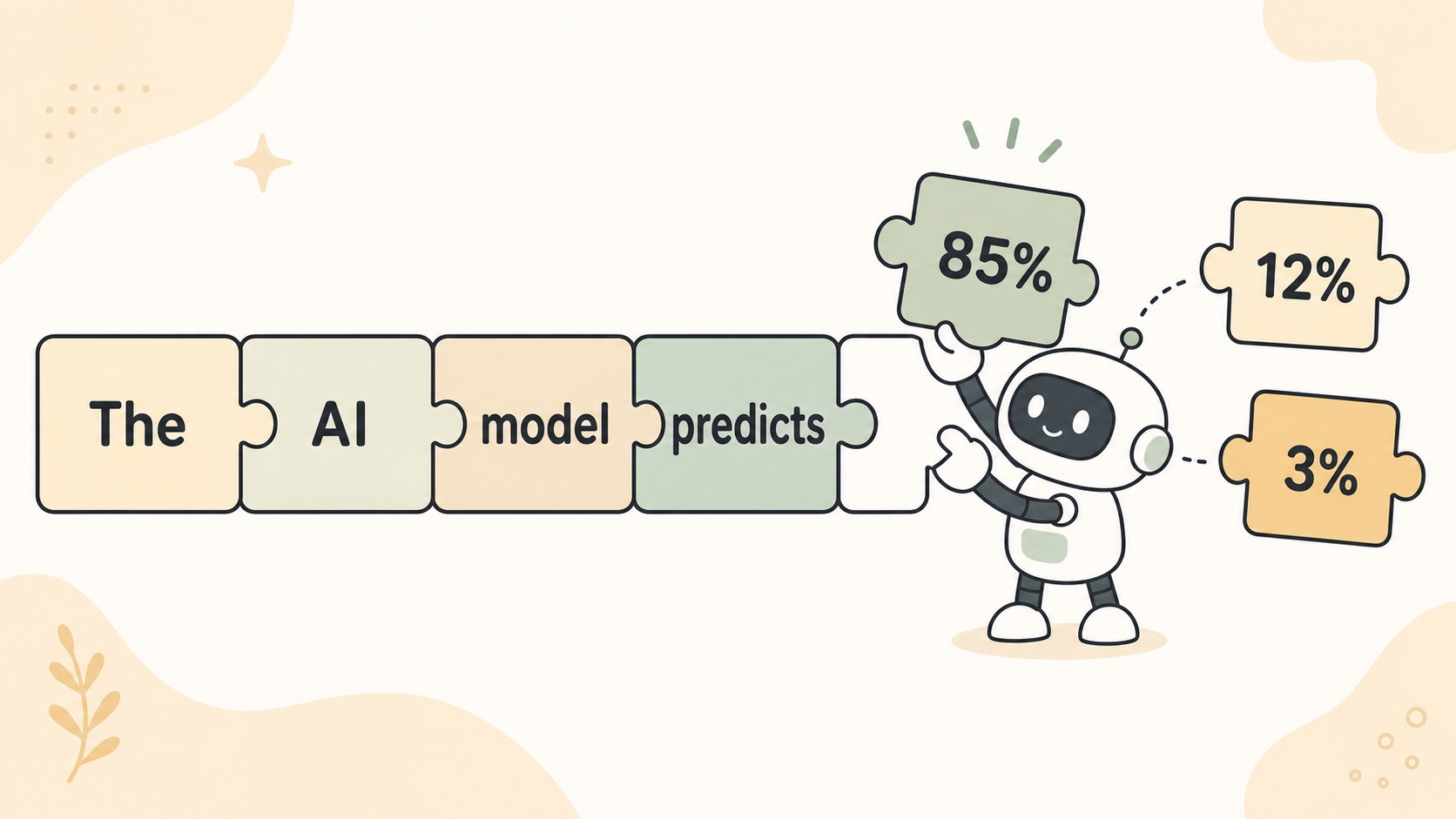
Three failure patterns follow from this that matter specifically for business use:
- The model is most dangerous on topics where it has partial knowledge. Total ignorance produces obvious errors. Partial knowledge produces subtle ones.
- Confidence in the output is not a reliable indicator of accuracy. A hallucinated answer reads identically to a correct one.
- The problem compounds with multi-step reasoning. Each step that builds on a previous hallucinated claim carries the error forward, and the final output may be internally consistent but completely wrong.
Why prompt engineering alone cannot fix this
The first instinct of many teams when they hear about hallucination is to improve the prompt. "If we just give it better instructions, it will stop making things up."
This is understandable. It is also wrong.
Prompts influence how the model behaves within its generation process. They cannot change what data the model was trained on, and they cannot give the model access to facts it does not have. Telling the model to "be accurate" or "cite your sources" changes its presentation style. It does not change its underlying knowledge gaps.
A concrete example: suppose your team asks an LLM to summarize a contract signed last month. That contract does not exist in the model's training data. No matter how carefully you phrase the prompt, the model will either refuse (a better outcome) or generate a plausible-sounding summary of a contract it has never seen (a worse one). The prompt cannot bridge that gap.
Three structural problems drive hallucination that prompts cannot resolve:
- The model has no live connection to your organization's internal data.
- The model cannot distinguish between what it learned accurately and what it learned from low-quality or conflicting sources.
- The model has no reliable mechanism to express calibrated uncertainty.
The architectural fix: grounding the model in your data
Solving hallucination at the enterprise level requires a change in architecture, not a better system message.
The approach most widely validated in production environments is Retrieval-Augmented Generation (RAG). RAG separates the generation step from the retrieval step. Before the model writes anything, a retrieval system pulls the relevant, verified documents from your organization's knowledge base. The model then generates its response based on those specific documents, not on its training data alone.
Three things change when you do this:
- The model's answer is anchored to source documents your team controls and can verify.
- Errors become auditable. When something is wrong, you can trace it back to the source rather than treating the model as a black box.
- The system can cite its sources explicitly, which lets your team apply the same review process they would apply to any junior analyst's work.
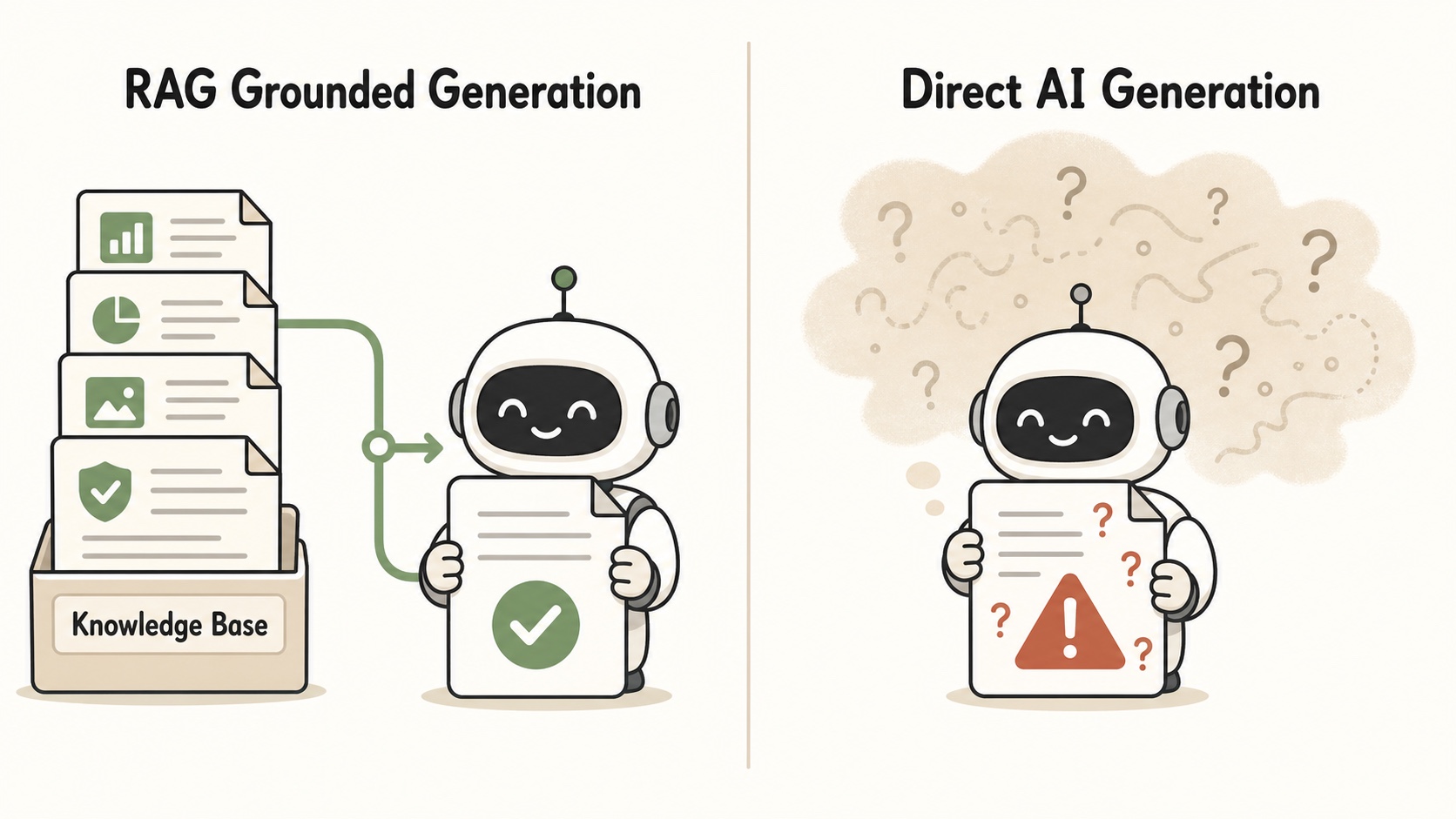
RAG is not the only option. For tasks that require multi-step reasoning across your systems, agent architectures add a planning layer that can call specific tools, databases, or APIs before generating a final answer. The hallucination risk drops because the agent operates on retrieved data at each step rather than generating from memory. Both approaches share the same design logic: the model acts as a reasoning engine applied to data your organization provides and controls, not a knowledge store you query in isolation.
The workflow fix: letting models debate each other
If retrieval-augmented generation anchors the intern to the right facts, you still need a way to review the writing style and catch lingering errors before a human editor steps in.
A single model reviewing its own work rarely finds its own mistakes. Like a human writer proofreading their own draft, the model remains blind to its own logic.
The solution is a cross-model review workflow:
- One model drafts the content based on your source documents.
- A different model, built on a separate architecture, reviews the draft against a strict checklist of constraints. It checks for style issues, formatting errors, or logical leaps.
- The reviewer model rejects the draft if it fails, providing specific feedback to the drafting model.
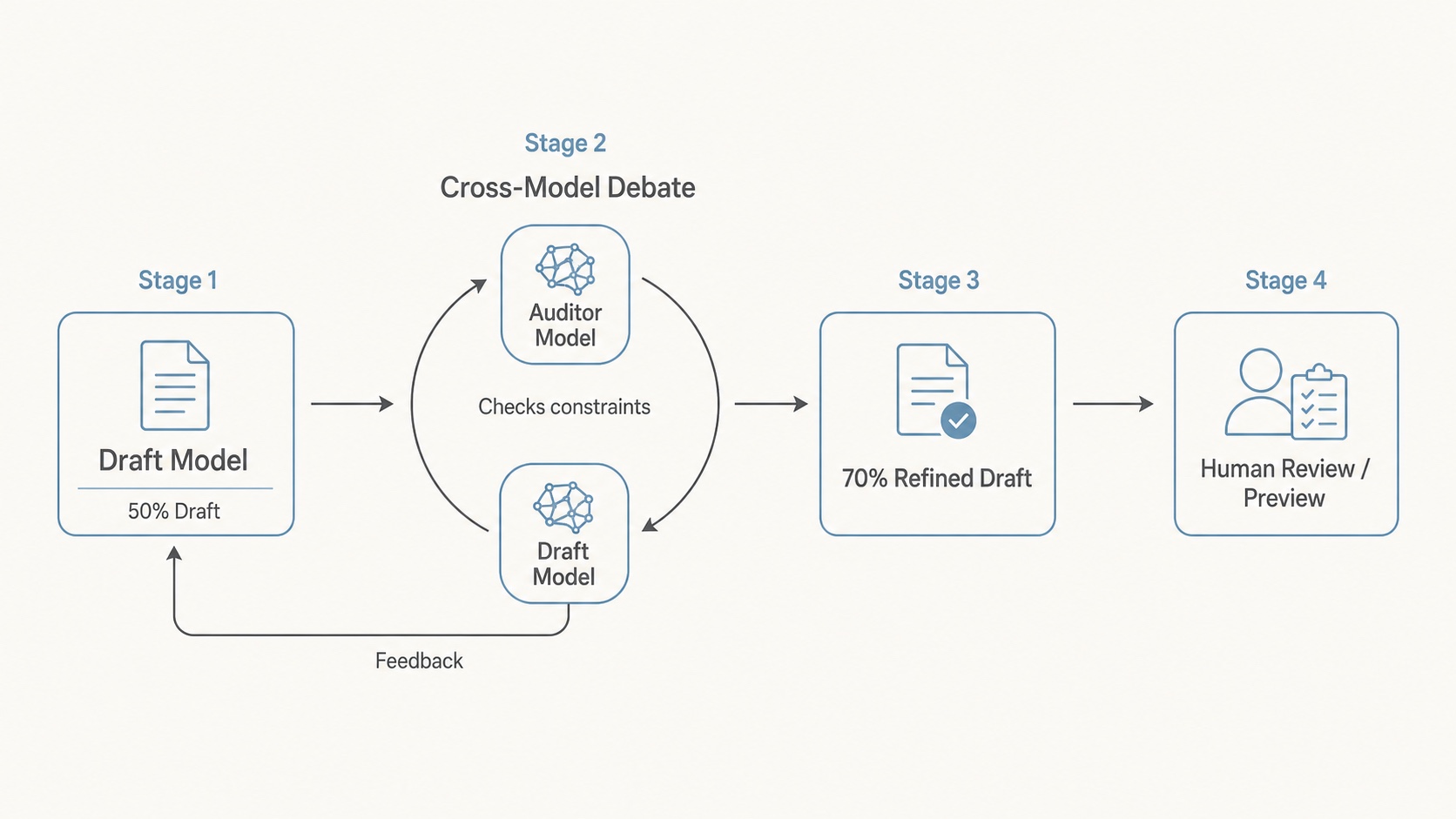
This process turns a raw 50% finished draft into a 70% finished product through automated debate. By the time the document reaches a human manager, the obvious errors, awkward phrasing, and basic hallucinations have already been caught. You still need to preview and sign off on the final version, but your team is now refining a high-quality draft rather than correcting basic mistakes.
To apply this multi-model review pattern in your daily work without writing code, see our hands-on guide: [[AI-Skill] How to Use Multi-Brain Review to Produce Top Quality AI Output](https://aruo.tech/blog/260720-ai-skill-cross-ai-review). This practical tutorial shows how non-engineers can use the /cross-ai-review skill to automate document quality checks for reports, proposals, and emails.
What this means for your team right now
Hallucination is not a bug that will be patched in the next model release. It is a structural property of how generative models work. Successive generations of frontier language models have reduced measurable hallucination rates on standard benchmarks, but none have reached zero, and independent evaluations consistently confirm error rates that matter at enterprise scale. The reason is architectural: the generation mechanism produces the statistically plausible next token, not the verified correct one. Scale and fine-tuning improve the distribution, but they do not change this fundamental property.
Given that, here is what your team should act on now:
- Treat LLM outputs as a first draft that requires review. You would not send a junior employee's work directly to a client without checking it. The same standard applies here.
- Identify which use cases carry the highest cost if the model is wrong. Legal, compliance, finance, and customer-facing content sit at the top of that list. These are the areas where retrieval grounding and human review are non-negotiable.
- Before adding more AI tools, audit your data infrastructure. A RAG system is only as good as the data it retrieves from. Fragmented, unstructured, or poorly permissioned internal data produces poor retrieval and compounds the hallucination problem rather than solving it.
- Build verification into the workflow from the start. The teams that get consistent value from AI treat it as a tool with a known failure mode, not as an oracle.
Understanding exactly how AI fails is what lets you design systems where those failures are caught before they cost you.
The intern, reconsidered
The issue was never the intern. The issue is a workflow that routes their unreviewed work directly to clients, or asks them questions they cannot possibly answer from their own knowledge.
A well-designed workflow gives the intern access to the right documents before they write. It builds in a review step. It routes the highest-stakes tasks to people with verified expertise. That logic applies directly to enterprise AI deployment: the model is capable, but the architecture around it determines whether that capability is reliable.